

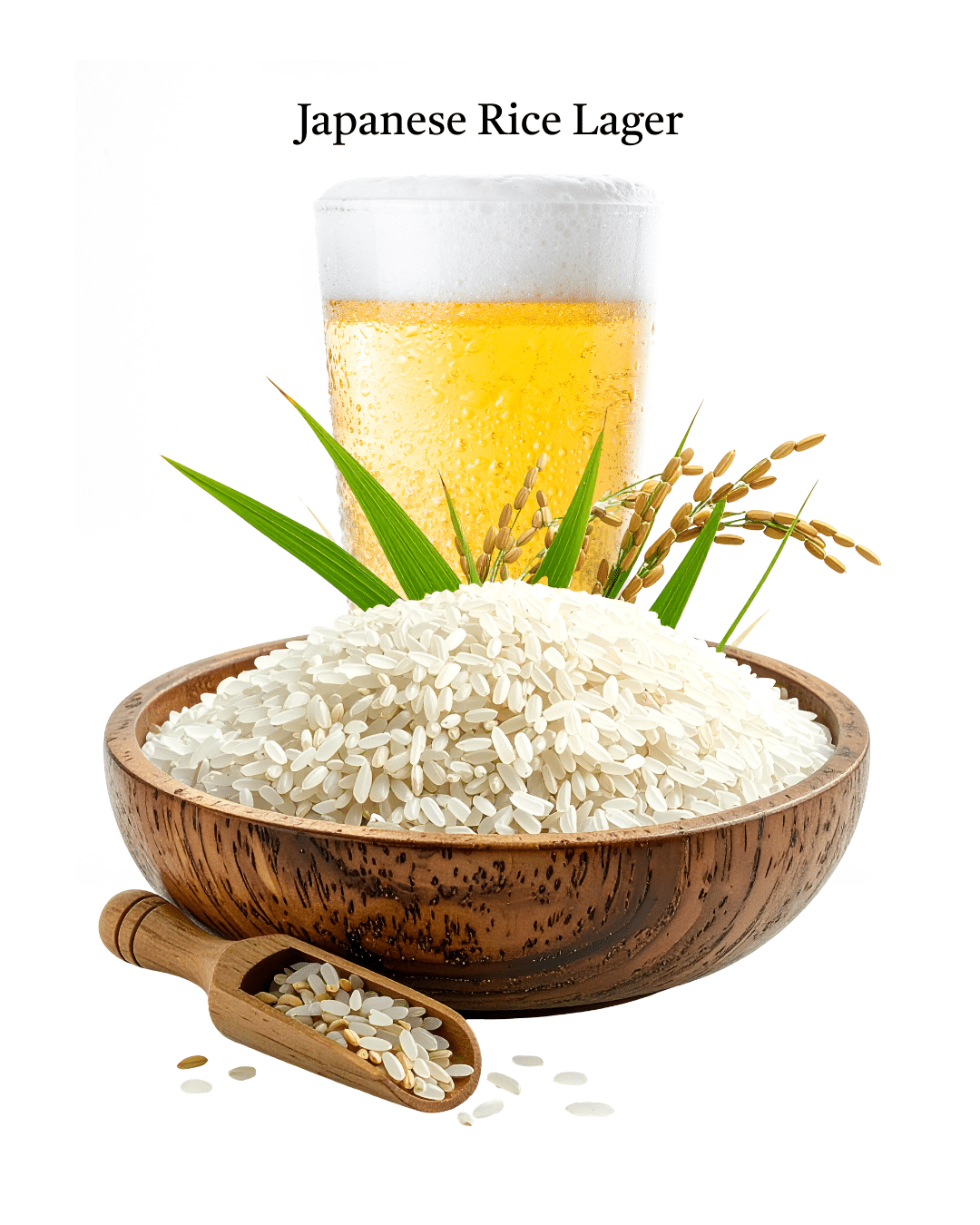
History of Japanese Rice Lager
Brief History of Brewing in Japan
Although the tradition of sake making is deeply rooted in Japanese history, brewing beer was not introduced until the mid-19th century, through the expansion of European settlement in Japan. In 1869, Spring Valley Brewery opened in Yokohama, founded by Norwegian American brewer William Copeland. Initially established to satiate thirsty foreigners, Spring Valley marked Japan’s commercial beer debut, as the forerunner and original brewer of Kirin beer.
In 1876, the Hokkaido Kaitakushi Beer Brewery was launched as Japan’s first government-run brewery. Located in Sapporo, Hokkaido, the brewery was led by German-trained Japanese brewmaster Sebei Nakagawa. The brewery was required to use locally produced hops and barley as part of a government initiative to support local agriculture and promote regional economic development.
In 1887, the brewery was sold to a private company and renamed the Sapporo Beer Company. The newly acquired company formally incorporated Sapporo as a brand, thereby cementing its place as Japan’s oldest beer brand. Sapporo played a significant role in popularizing beer among Japanese by introducing a European-style lager made from high quality ingredients.
American Rice Beer
Rice was first incorporated as an additional grain, or adjunct, in the original Budweiser recipe developed by Aldophus Busch in 1876. At the time, it was common practice for big American breweries to use corn as cheap filler to increase malt content and lighten the body of beer. Unfortunately, corn often had the unwanted side effect of leaving behind sweet and oily flavours. Rice, on the other hand, had the benefit of both reducing weight and enhancing the clarity of a beer without adding undesirable flavours.
Japanese Rice Lager
While the use of rice in American brewing had been practiced for many decades, rice-based beer, for which Japan is globally renowned, didn’t gain momentum until the end of the 20th century. Japanese brewers were not prohibited from using rice and other adjunct grains in beer, but they primarily stuck to traditional German brewing methods.
During the Pacific War, malted grains were in short supply, and strict rationing meant that most beer was made with supplementary ingredients. In his book Brewed in Japan: The Evolution of the Japanese Beer Industry, Jeffrey Alexander notes that in Japan, as in the US, all-malt lagers became relatively scare in the post-war era. Moreover, he argues that people had become accustomed to lighter, crisper beer with supplementary ingredients, creating a shift in consumer preference following the end of the war.
It wasn’t until late 1980s that that the first commercially successful Japanese rice lager was introduced. In 1987, Asahi released Super Dry – a light, crisp rice lager that offered a refreshing alternative to a market dominated by hoppy and bitter pale lagers. Initially written off as a passing fad, Asahi inspired a movement toward drier beer styles. Taking inspiration from American brewers, Asahi used rice to create lighter, cleaner and less bitter beer.
For a very long time, rice as an adjunct grain was almost exclusively associated with Budweiser and Coors, as a cheap filler for slightly sweet, bland mass-produced lagers. In recent years, Japanese rice lagers have started gaining traction within the craft beer community. Japanese rice lagers prioritize clean, delicate flavour profiles with a restrained hop bitterness. With an emphasis on quality, this beer style features higher rice percentages than American light lagers, often featuring specialized types of rice for brewing. With subtle and fresh flavour, Japanese rice lagers are a perfect brew for any beer drinking occasion.
(Leah is a Toronto based freelance writer as well as the Beer Boss and a server at C’est What)